
Finding Peace After Witnessing Violence: A Biblical and Psychological Guide

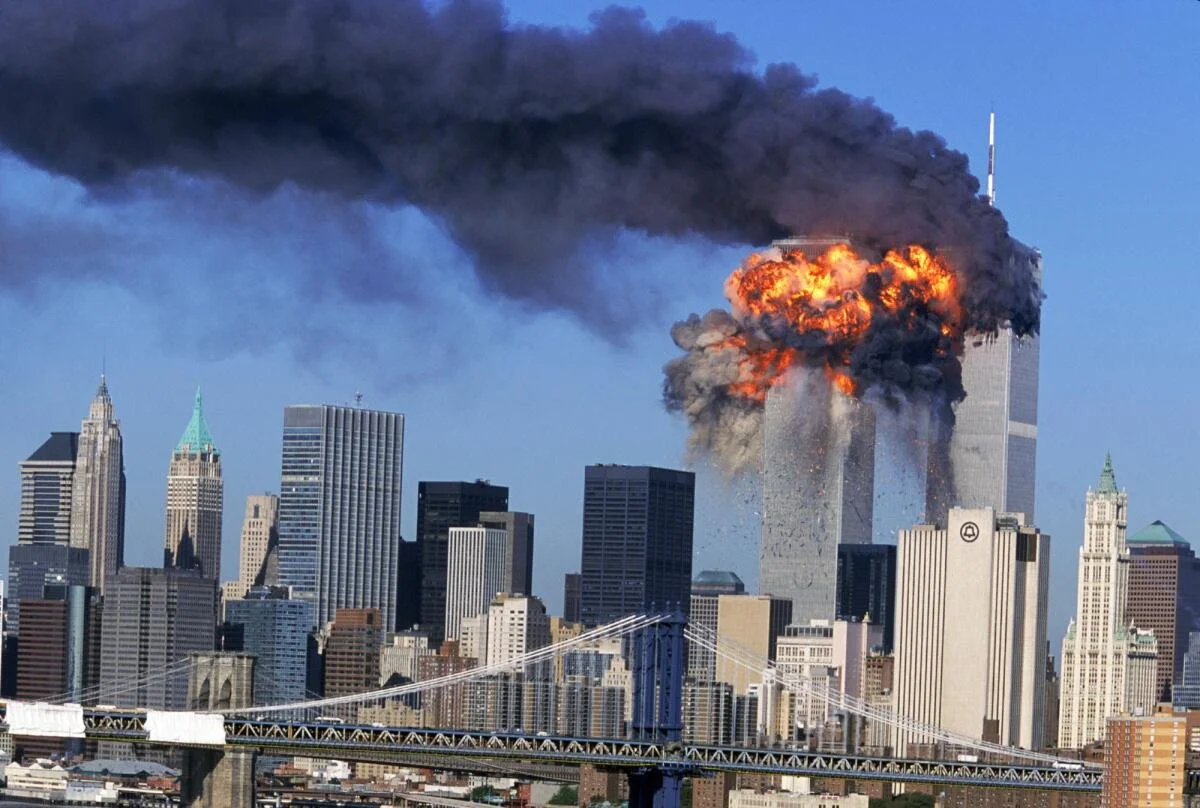
USA Today Photo
There are a few days in my life that I recall tragedy, when I remember exactly what was happening around me. One example is that I remember being at my grandparents' house when I heard that Elvis died. I remember where I was when I heard the news that the World Trade Center Towers were attacked. I remember listening to breaking news on NPR while driving to Calvary Baptist Church in Waco, Texas. I remember talking about it with my seminary buddy, Jonathan Grant. I remember watching in horror as the second tower collapsed and all the cement-dust-covered people ran from the scene. I remember watching the news that night and being appalled that some people in the Middle East were riding in the beds of Toyota trucks, shooting guns into the air, saying, “Death to America.”
That was twenty-four years ago today. But this anniversary feels different because of yesterday's assassination of Charlie Kirk. Perhaps, like me, you are searching for ways to understand and make sense of the world. Here are my thoughts, which I hope you will find helpful.
[If you have children, click here to read about ways that you might help them navigate the days ahead.]
Why Violent News Affects Us More Than We Realize
You don’t have to search long to find disturbing images of violence in today’s world. A breaking news broadcast. A viral video clip. A tragedy replayed endlessly on social media. What once might have taken days or weeks to reach us now arrives instantly—in our homes, at work, even in our pockets.
And while many adults try to “shrug it off,” the truth is that constant exposure to violent news and images can leave lasting effects. Research shows that repeated exposure to violence on television heightens stress, anxiety, and even depression (American Psychological Association, 2017). In fact, a study after the Boston Marathon bombing found that adults who watched more than six hours of coverage daily reported higher acute stress than some people present at the event itself (Silver et al., 2013).
At the same time, Christians wrestle with deeper spiritual questions: Where is God in the midst of evil? How do we remain hopeful when fear dominates the headlines?
This article will guide you through both biblical wisdom and psychological insight to understand why televised violence impacts us so deeply, and how to respond with resilience. You’ll discover:
Why disturbing images unsettle both body and spirit
What Scripture teaches about living in a fallen world
Practical coping strategies that integrate Christian faith and psychology
How Christian community brings healing
When to seek professional and pastoral support
Understanding the Impact of Media Violence
Why Disturbing Images Affect Us So Deeply
God created us with empathy. Romans 12:15 calls believers to “weep with those who weep.” Psychology echoes this truth: our mirror neurons fire when we see suffering, which means our brains react as though we, too, are suffering. Media violence magnifies this reaction and can overwhelm us.
“The eye is the lamp of the body” (Matthew 6:22). What we take in through our screens shapes our inner world—sometimes wounding it.
The Brain and Body’s Response to Trauma
When we watch violent news, the body often releases cortisol and adrenaline. The nervous system cannot easily distinguish between a direct threat and a mediated one. That’s why after watching a disturbing report, you may notice your muscles tense, your heart race, or your sleep disrupted. This is the body’s God-designed alarm system—protective in immediate danger, but exhausting when triggered repeatedly by screens.
Biblical Truth About Living in a Violent World
The Fall and the Brokenness of Creation
From the beginning, Scripture is clear: violence was never God’s design. Genesis 3 describes how sin fractured creation, setting in motion cycles of suffering and fear. As Paul writes in Romans 8:22, “We know that the whole creation has been groaning as in the pains of childbirth right up to the present time.”
God’s Presence in the Valley of Fear
Even in chaos, God remains present. Psalm 23:4 reminds us: “Even though I walk through the valley of the shadow of death, I will fear no evil, for you are with me.” Theologically, we affirm that our Shepherd walks with us. Psychologically, repeating this truth helps calm the mind and re-anchor us in safety.
The Hope of Resurrection
Christ’s resurrection declares decisively that violence and death do not have the last word. Christians grieve tragedies but not as those without hope (1 Thess. 4:13). This resurrection perspective is not denial of pain—it reframes pain with ultimate hope.
Common Reactions to Violent News
Emotional and Physiological Responses
Racing heartbeat, sweaty palms, or muscle tension
Restless sleep or vivid nightmares
Emotional flooding, tearfulness, or irritability
Difficulty focusing at work or staying present with family
Imagine this: You see footage of a public attack on the news. Later that night, you double-check the locks on your doors or startle at sudden noises. Your body is attempting to regain safety, even though the event occurred far away.
Spiritual Struggles and Questions
“Why would God allow this?”
Doubt about God’s goodness or power
Feeling numb or distant in prayer
Growing cynicism about people and the world
Pastoral reminder: These struggles do not indicate weak faith. The Psalms normalize lament, and psychology affirms that naming these inner responses is the first step toward healing.
Practical Coping Strategies for Christians
Breath Prayers and Grounding Techniques
Research confirms that deep breathing lowers cortisol levels and calms the nervous system. Pair this technique with Scripture:
Inhale: “When I am afraid…”
Exhale: “…I put my trust in You” (Psalm 56:3).
Other grounding tools include the 5-4-3-2-1 exercise: name 5 things you see, 4 you feel, 3 you hear, 2 you smell, and 1 you taste. Conclude by meditating on Psalm 46:10: “Be still, and know that I am God.”
Limiting Repeated Media Exposure
Watching a tragedy once may inform us; watching it twenty times deepens trauma. Studies show that repeated media exposure after violent events increases distress more than direct exposure in some cases (Silver et al., 2013). Philippians 4:8 calls us to filter what we dwell on: “Whatever is true, whatever is noble… think about such things.”
Restoring Rhythms of Health and Sabbath
Healthy rhythms—consistent sleep, balanced meals, exercise, and especially Sabbath rest—act as buffers against anxiety. God gives Sabbath not merely as a command but as a gift, reminding us that our world is in His hands, not ours.
The Role of Christian Community in Healing
Bearing One Another’s Burdens
Galatians 6:2 says, “Carry each other’s burdens, and in this way you will fulfill the law of Christ.” Psychology affirms that safe community reduces trauma symptoms and strengthens resilience.
Turning Prayer Groups Into Spaces of Resilience
Some churches respond to public tragedies by gathering for vigils—reading Psalms, praying, lighting candles, and singing. These practices not only comfort but also regulate emotional stress, reducing isolation and reminding believers of God’s presence through His people.
Moving from Fear to Faith-Driven Compassion
Overcoming Evil with Good
Romans 12:21 directs us: “Do not be overcome by evil, but overcome evil with good.” Fear shrinks the heart; compassion enlarges it.
Transforming Pain Into Acts of Service
Psychological research shows that prosocial acts—such as volunteering, advocacy, or prayer for others—mitigate trauma’s effects by restoring agency (Koenig, 2012).
Practical examples:
Write letters of encouragement to victims’ families.
Give blood after local tragedies when needed.
Volunteer with ministries that serve communities in crisis.
Pray regularly for peace and healing in our world.
Even small acts transform helplessness into hope. (Writing this blog and my previous blog have been ways that I have coped with the events of the past few days.)
When to Seek Professional or Pastoral Help
Signs That Trauma Requires Additional Care
Consider seeking help if you notice:
Flashbacks or nightmares lasting more than several weeks
Severe anxiety, depression, or inability to function at work or home
Withdrawal from relationships or church
Hopelessness or thoughts of self-harm
How Faith and Psychology Work Together for Healing
Seeking therapy is not a failure of faith—it is an act of stewardship. Trauma-focused therapies such as TF-CBT and EMDR are supported by the National Institute of Mental Health (2021). Many believers find healing when professional care is paired with pastoral support and prayer.
Conclusion: Living with Peace in a Troubled World
Violence in the media reminds us daily that creation groans under the weight of sin. Yet as Christians, we cling to a deeper truth: God has not abandoned us. Christ has overcome the world, and His peace still steadies our hearts (John 16:33; Philippians 4:7).
We can respond faithfully by:
Acknowledging our emotions without shame
Practicing grounding and prayerful techniques
Limiting media overexposure
Resting in rhythms of Sabbath
Leaning into Christian community
Seeking professional and pastoral support when needed
How do you respond when violent news unsettles your spirit? What helps you remain steady—prayer, Scripture, music, community? Share your thoughts in the comments below. Your voice just might encourage another believer who feels shaken today.
If this article strengthened your faith, please share it with friends, your small group, or your church network. Together, in a fearful age, we can remind one another:
The news may shake us, but Christ steadies us. He is our rock and our refuge.
References
American Psychological Association. (2017). Children and Trauma Update: Who is at Risk, What Can Be Done. PDF
Koenig, H.G. (2012). Religion, Spirituality, and Health: The Research and Clinical Implications. ISRN Psychiatry.
Rideout, V.J., Foehr, U.G., & Roberts, D.F. (2010). Generation M2: Media in the Lives of 8- to 18-Year-Olds. Kaiser Family Foundation. PDF
Silver, R.C., et al. (2013). Repeated media exposure to the Boston Marathon bombings triggered acute stress symptoms in U.S. adults. Proceedings of the National Academy of Sciences (PNAS), 110(23), 9379–9384.
National Institute of Mental Health. (2021). Trauma-Focused Cognitive Behavioral Therapy (TF-CBT). Link
