
Why "I Forgive You" Isn't Always Enough: What Your Brain and the Bible Say About Real Forgiveness in Marriage

She didn't lie.
That's the thing she needs someone to tell her. Because three weeks after she looked her husband in the eye and said "I forgive you" — and meant every word — she's lying awake at 2 a.m. replaying the conversation she already decided to release. And the shame of that is almost worse than the original wound. What's wrong with me? Why can't I just let it go?
He's confused too. He heard her say the words. He watched her mean them. So why does it still feel like they're standing in the rubble?
This is the quiet crisis inside a lot of Christian marriages after a significant hurt. Not that forgiveness wasn't offered. It was. But somewhere between the moment it was spoken and the weeks that followed, something didn't add up. The declaration happened. The healing didn't.
And nobody told them that was normal.
Here's what I want you to know before we go any further: saying "I forgive you" is real. It matters. It is not nothing. But for many couples, it's the beginning of the journey — not the finish line. And the gap between those two things is not a sign that something is broken in you or in your marriage. It's a sign that forgiveness is more than a moment. It always has been.
What we're going to look at together is why. What Scripture actually teaches about forgiveness — not the bumper-sticker version, but the costly, present-tense, covenant kind. What neuroscience reveals about why the body holds onto wounds longer than the mind would like. What the research shows about how real forgiveness unfolds in real people. And what it can look like, practically and honestly, inside a marriage that is trying to heal.
This isn't a post about trying harder. It's about understanding what you're actually in the middle of — so you can stop being afraid of the process and start trusting it.
The Moment We Think Forgiveness Happens
Why Christian Couples Feel Pressure to Forgive Quickly
There's a particular kind of pressure that settles onto Christian couples after a significant hurt. It's the quiet, persistent sense that a good spouse — a spiritually mature spouse — should be over it by now. That holding onto pain is the same as refusing to forgive. That if you've said the words and meant them, moving on should follow naturally.
It doesn't always.
The Difference Between Deciding to Forgive and Actually Healing
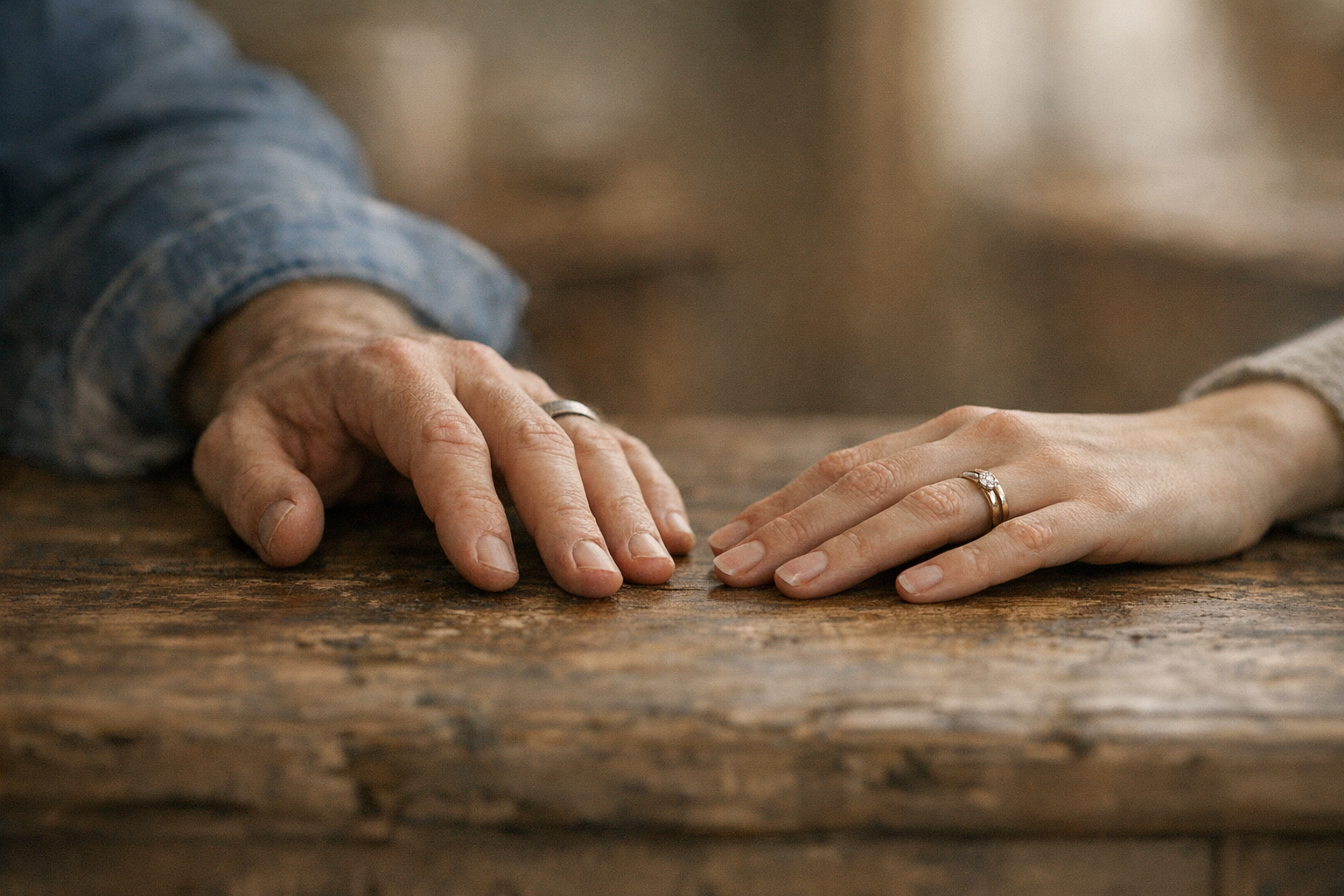
Forgiveness has a moment. The decision to release someone from the debt they owe you — that can happen in an afternoon. But forgiveness also has a process. And the process reaches into parts of you that the decision never touched — the places where the wound still lives, still reacts, still remembers.
Saying "I forgive you" is the gate. What's on the other side of the gate is where the actual journey begins. And that gap — between the decision and the felt reality — is not evidence of spiritual failure. It's evidence that you're human, and that healing takes time.
What the Bible Actually Says About Forgiveness
Forgiveness in Scripture Is a Heart-Attitude, Not a Transaction
Paul's instruction in Colossians 3:13 is worth sitting with slowly. "Bearing with one another, and forgiving each other" (NASB) — the language is present tense, ongoing, continuous. Not having forgiven. Forgiving. There's a heart-attitude embedded in that word that most English readers miss. It's not a transaction to complete. It's an orientation to sustain.
Jesus tells a story in Matthew 18 about a servant forgiven an impossible debt who turns around and demands payment from someone who owes him far less. The point isn't just about ingratitude. It's about the kind of heart that forgiveness produces — one that keeps returning to the memory of its own forgiveness, and lets that memory soften what it might otherwise harden.
What the Hebrew Word "Nasa" Reveals About How God Forgives
The Hebrew word nasa — used throughout the Old Testament for forgiveness — means to lift, to carry, to bear away. It's a physical image. A burden being shouldered and removed. What's striking is that the word implies weight. Forgiveness in Scripture isn't the erasure of something that never mattered. It's the costly bearing away of something that genuinely hurt.
God's own forgiveness works this way. He doesn't simply declare it from a distance. He acts on it — through covenant, through sacrifice, through continued presence. He stays. That's the model. And it tells us something important: forgiveness is offered before trust is fully rebuilt. They are not the same movement, and they don't happen on the same timeline.
What Neuroscience Tells Us About Why Forgiveness Is Hard
Why Your Body Remembers the Wound Even After You've Decided to Forgive
The brain encodes painful relational experiences differently than ordinary memories. When a wound happens inside a marriage — a betrayal, a pattern of contempt, a moment of devastating carelessness — the amygdala, the brain's threat-detection center, logs it. Not as a story. As a signal.
Which is why a tone of voice, a particular phrase, even a time of year can bring back the full weight of something a spouse has genuinely decided to release. The mind forgave. The body is still watching.
This isn't weakness. It's neurology.
Neuroplasticity and the Hope of Emotional Healing in Marriage
What makes this hopeful rather than hopeless is neuroplasticity — the brain's ability to rewire itself through new experience. The neural pathways carved by a wound don't have to be permanent. But they change slowly, and they change through repetition.
Repeated experiences of emotional safety — of being known and not abandoned, of conflict handled with care — gradually quiet the alarm. The brain needs evidence, not just decisions. Which means that every time a couple chooses to stay, to listen, to repair — they are doing more than they know. They are building the very conditions under which forgiveness becomes felt, not just declared.
The Psychology of Real Forgiveness — What the Research Shows
The REACH Model — A Research-Based Path to Forgiving Your Spouse
Dr. Everett Worthington has spent decades studying how forgiveness actually happens in real people — and what he found is that it isn't a single act of willpower. It's a series of movements. His REACH model gives couples a structured path that doesn't skip over the hard parts.
Recall the hurt — honestly, without minimizing it or catastrophizing it. Empathize with the humanity of the person who caused it — not to excuse what they did, but to see them as more than what they did. Offer forgiveness as an Altruistic gift, freely given rather than exchanged. Commit to the decision in a concrete way. And Hold onto that commitment when the feelings don't cooperate — because they often won't, at least not right away.
Why Forgiveness Is a Decision Before It's a Feeling
Douglas Snyder's research adds something worth holding onto. Forgiveness isn't primarily an emotional event. It's a shift in how a person thinks about what happened — and about the one who caused it. Which means you can make the decision to forgive before you feel the freedom of it.
That's not hypocrisy. That's what it actually looks like to choose grace before grace feels natural.
Gottman's research on couples who repair well adds one more layer. The couples who forgive effectively don't bury the injury — they process it together. The wound gets spoken, heard, and honored before it gets released. It's worth saying gently: using the language of forgiveness to avoid that harder conversation is understandable, especially when the pain is raw. But it tends to delay the very healing both spouses are hoping for.
What Real Forgiveness Looks and Feels Like in Marriage
The Difference Between Suppressing Hurt and Working Through It
Marcus and Diane sat across from each other at the kitchen table six weeks after the affair came to light. She had said she forgave him. She'd said it more than once. But every time he tried to move forward — to be warm, to reach for her hand, to act like they were okay — she pulled back.
He thought her forgiveness meant they'd turned a corner. She thought it meant she was supposed to feel different than she did. Both of them were sincere. Neither of them had enough language for what was actually happening.
Suppressing the hurt produces a brittle peace. It looks like resolution but it isn't. It's a sealed room that will eventually need to be opened. Working through the hurt is slower, harder, and messier from the outside. But it's what actually heals.
Can You Forgive and Still Grieve? Yes — Here's Why That's Not a Contradiction
Real forgiveness doesn't produce instant peace. It produces a commitment to keep walking toward the person who hurt you — even when every instinct says to protect yourself. There's grief in that. Real grief — for what was broken, for the version of the marriage that existed before, for the trust that has to be rebuilt from the ground up.
Forgiving and grieving are not opposites. They can exist in the same heart at the same time. That isn't spiritual failure. It's emotional honesty before God. "He heals the brokenhearted and binds up their wounds." (Psalm 147:3, NASB). That healing is real. It's also rarely instant.
When the Words Come Too Soon — and What to Do Instead
What to Say When You're Not Ready to Fully Forgive Yet
Sometimes "I forgive you" gets said because someone doesn't know what else to say. Because the silence is uncomfortable and the words bring temporary relief. Because ending the conflict feels like the right thing to do.
That's understandable. But it can delay the real work.
If you're not there yet — if you want to forgive but you're still in the middle of it — there's something more honest available to you. I want to forgive you. I'm choosing to move toward that. That's not a lesser statement. That might be a truer one. It makes room for the process instead of pretending the process is already finished.
Forgiveness as a Covenant Commitment, Not a One-Time Conversation
Forgiveness isn't a confessional moment to get through. It's a covenant commitment to return to. Couples who heal well come back to it — not to reopen the wound unnecessarily, but because they've learned that forgiveness isn't a single conversation. It's a direction. Something you keep choosing together, until the choosing gets easier.
Conclusion
Forgiveness is not a moment you get through. It's a direction you keep choosing.
That might be the most important sentence on this page. Because the couples I've seen struggle most with forgiveness aren't the ones who refused to offer it. They're the ones who offered it sincerely — and then felt like failures when the healing didn't follow immediately. They said the words. They meant them. And then life kept being hard, and they didn't understand why.
Now you have some language for that. The brain encodes relational wounds as threat signals, not just memories — and it heals through repeated experiences of safety, not through decisions alone. Scripture frames forgiveness as an ongoing posture, not a transaction. The research confirms what the most honest couples already know: you can choose to forgive before you feel the freedom of it, and that isn't weakness. That's what grace under pressure actually looks like.
Real forgiveness — the kind that heals a marriage rather than just silences it — requires the wound to be spoken, heard, and honored. It makes room for grief. It moves at the pace of two people, not just one. And it is sustained by something larger than willpower.
The God who commands forgiveness is also the God who sustains it. He is patient with the process because He authored it — and He is present in every hard, halting step a couple takes toward each other. That patience is not passive. It is the same patience that stayed through every covenant broken and renewed in Scripture, the same that "has not dealt with us according to our sins, nor rewarded us according to our iniquities." (Psalm 103:10, NASB). It is available to your marriage right now, in whatever stage of this you find yourselves.
If you and your spouse are somewhere in this process — you are not behind. You are not failing. You are in the middle of something that takes time, and the fact that you're still trying matters more than you know.
The next post in this series goes one step further:Forgiveness Is Not Reconciliation — A Distinction Every Hurting Couple Needs to Hear. If this post raised questions about trust, rebuilding, and what forgiveness actually requires of each of you going forward — that one is written for exactly where you are.
If something here landed for you — a phrase, an idea, a moment of recognition — share it in the comments because your story might be exactly what another couple needs to read today. Share this post with someone who's in the middle of it. You might be giving them permission to breathe.
The best of your marriage is still ahead of you.
Sources
Worthington, E. L., Jr. (2006). Forgiveness and Reconciliation: Theory and Application. Routledge.
Worthington, E. L., Jr. (2001). Five Steps to Forgiveness: The Art and Science of Forgiving. Crown Publishers.
Snyder, D. K., Baucom, D. H., & Gordon, K. C. (2007). Getting Past the Affair: A Program to Help You Cope, Heal, and Move On — Together or Apart. Guilford Press.
Gottman, J. M., & Silver, N. (1999). The Seven Principles for Making Marriage Work. Crown Publishers.
Gottman, J. M., & DeClaire, J. (1997). Raising an Emotionally Intelligent Child. Simon & Schuster.
LeDoux, J. (1996). The Emotional Brain: The Mysterious Underpinnings of Emotional Life. Simon & Schuster.
Siegel, D. J. (2010). Mindsight: The New Science of Personal Transformation. Bantam Books.
